8,124 people live in Downtown, where the median age is 43 and the average individual income is $65,837. Data provided by the U.S. Census Bureau.
Total Population
Median Age
Population Density Population Density This is the number of people per square mile in a neighborhood.
Average individual Income
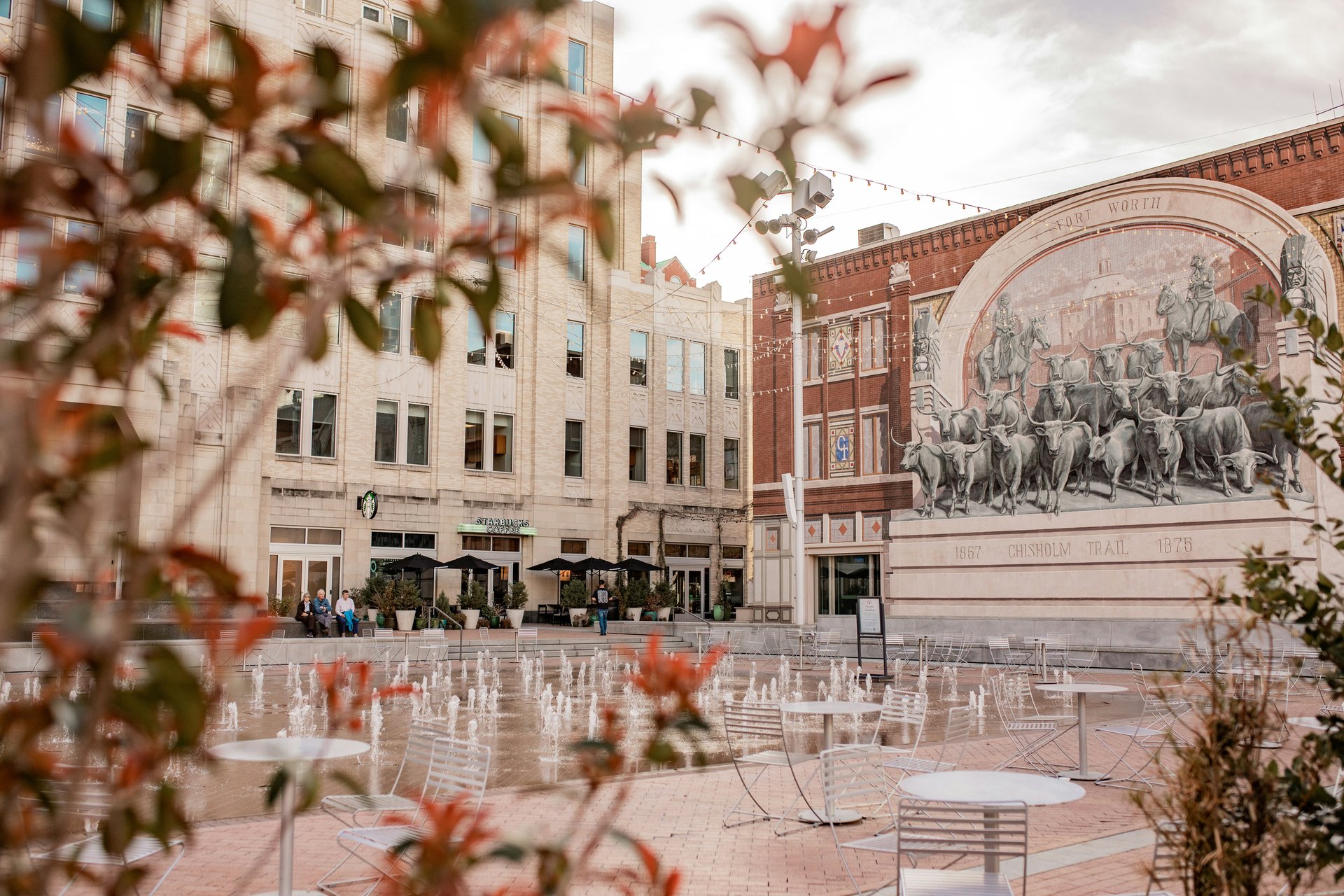
Downtown Fort Worth blends historic character with modern urban energy. Known for its Sundance Square district, striking skyline, and walkable streets, the area offers a refined yet approachable city lifestyle in the heart of North Texas. Residents enjoy upscale high-rise living, restored historic lofts, cultural venues, and immediate access to dining, entertainment, and corporate offices—all within minutes of the Trinity River and major business corridors.
Located west of Dallas and anchored by Sundance Square, Downtown Fort Worth serves as the city’s commercial and cultural core. The neighborhood features luxury condominiums, contemporary apartment towers, boutique office spaces, and preserved early-20th-century architecture. Residents have walkable access to Bass Performance Hall, the Fort Worth Water Gardens, fine dining establishments, and year-round events. With TEXRail and Trinity Metro connections, as well as direct routes to I-30 and I-35W, downtown offers both urban convenience and regional connectivity—making it an appealing option for professionals, investors, and those seeking low-maintenance city living.
| Key Facts about Downtown Fort Worth, TX | |
|---|---|
| Area | Approx. 3 sq mi (Downtown district core) |
| County | Tarrant County |
| Established | Late 1800s commercial district; major revitalization in the 1980s–present |
| Population (est.) | ~10,000+ residents within the greater downtown area |
| Housing Types | Luxury high-rise condos • Historic loft conversions • Modern apartments • Mixed-use residences |
| Signature Attractions | Sundance Square • Bass Performance Hall • Fort Worth Water Gardens • Sid Richardson Museum • Trinity River Trails |
| Main Roads & Transit | I-30 • I-35W • TEXRail (to DFW Airport) • Trinity Metro • Fort Worth Central Station |
From luxury condominiums with skyline views to character-rich loft residences, Downtown Fort Worth delivers urban sophistication, cultural depth, and strong long-term real estate appeal in one of Texas’ fastest-growing metropolitan centers.
Downtown Fort Worth sits at the center of Tarrant County and anchors the Fort Worth–Arlington–Dallas region with a walkable mix of corporate offices, arts venues, and urban living. Sundance Square, the Convention Center district, and the Trinity River corridor create a compact core where dining, events, and day-to-day essentials are close at hand. Most local trips are easy by car, while downtown’s grid layout supports comfortable walking and quick rideshare connections.
For regional access, Downtown Fort Worth connects directly to I-30 and I-35W, with straightforward routes to DFW International Airport and the broader Metroplex. Public transit options include Trinity Metro bus service and commuter rail connections from Fort Worth Central Station, making downtown a practical home base for frequent travelers and commuters.
| Connectivity & Transportation — Downtown Fort Worth, TX | |
|---|---|
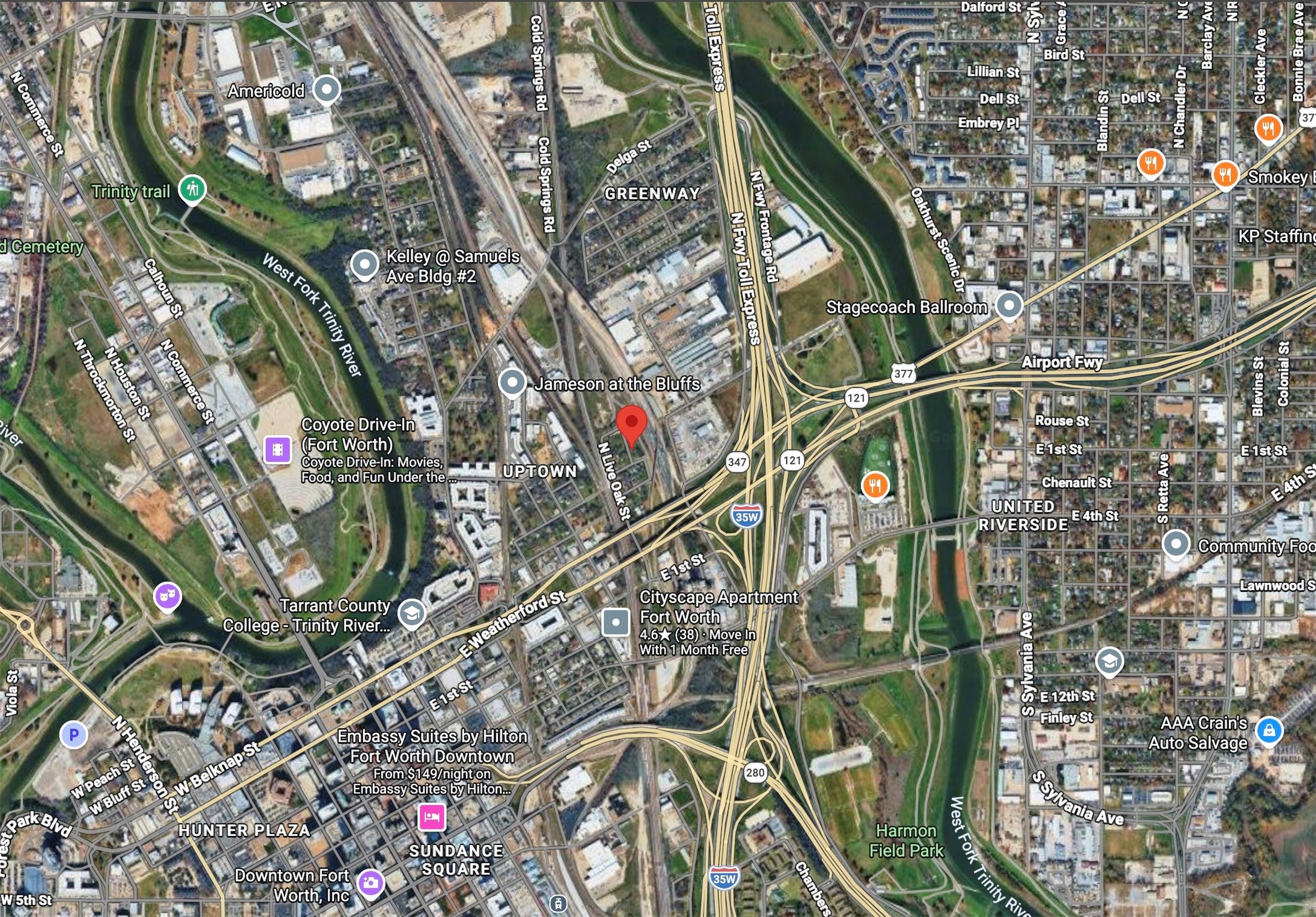
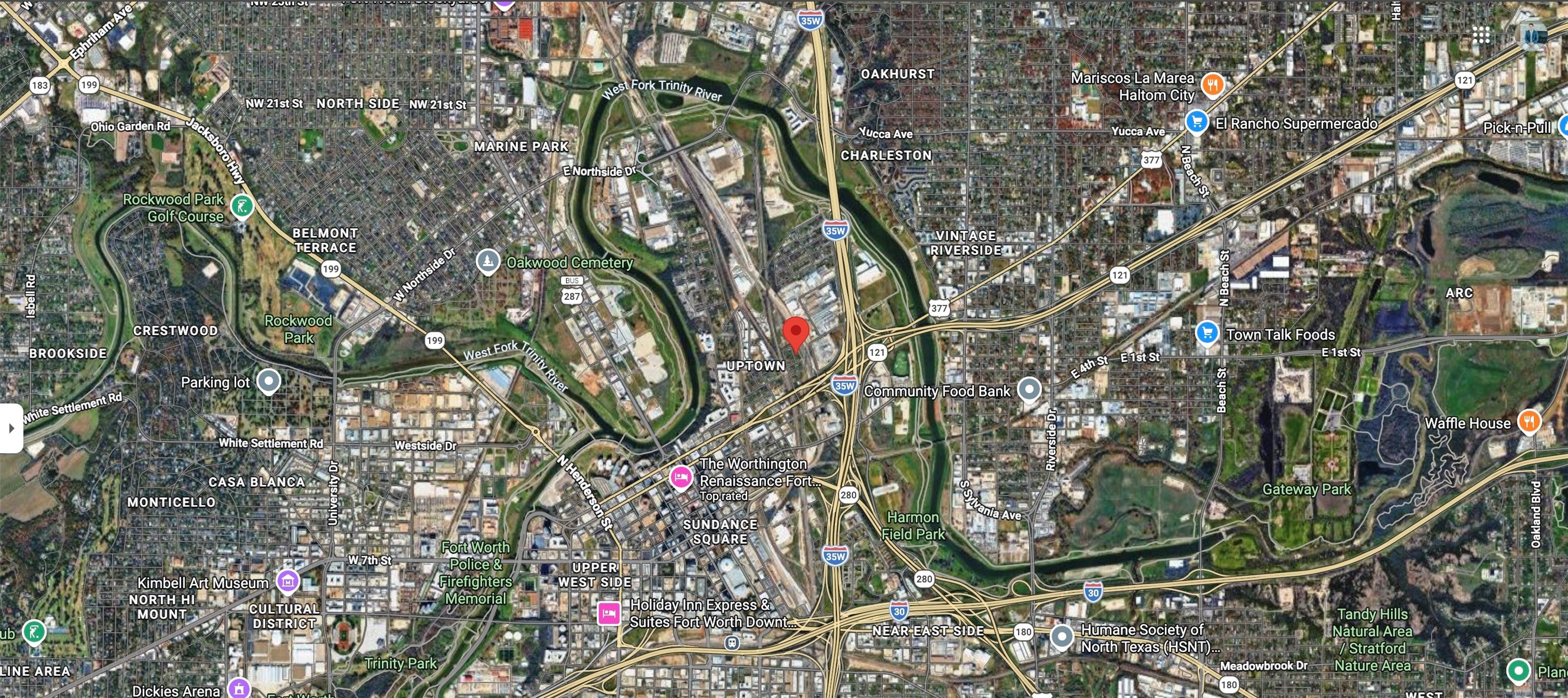
| Location Map & Downtown Overview | Central Fort Worth core anchored by Sundance Square, the Convention Center district, and key civic + cultural venues. Downtown’s most direct regional connections run along I-30 (east–west) and I-35W (north–south), with quick access to the Trinity River and major employment corridors. |
| Nearby Areas & Communities |
|
| Attractions & Points of Interest |
|
| Public Transport |
|
| Road Access & Main Highways |
|
| Typical Drive Times* |
*Traffic and event schedules can affect timing
|
| Parking | Downtown offers a mix of garages, surface lots, and metered street parking—especially around Sundance Square and the Convention Center area. On peak event nights, garages fill earlier; planning ahead (or using rideshare) helps simplify arrival and departure. |
| Walking & Cycling | Downtown is highly walkable, with short blocks, active streetscapes, and direct access to the Trinity River Trails. Cycling is common for commuting and recreation, with trail networks supporting longer, car-light routes. |
| Taxi & Ride Apps | Uber and Lyft operate throughout Fort Worth, with strong coverage downtown. Local taxi services and private car options are also available for airport runs and event transportation. |
| Airport Access |
|
| Accessibility & EV | Downtown venues, sidewalks, and many major attractions support ADA access; confirm specifics for event seating and older historic buildings. EV drivers will find a growing mix of Level 2 and select DC fast charging options in public garages, mixed-use developments, and retail hubs nearby. |
Downtown Fort Worth’s real estate market continues to reflect steady urban demand driven by corporate relocation, walkability, and proximity to cultural and entertainment districts. As of mid–late 2025, the broader Fort Worth median home price hovers in the $335K–$360K range, while downtown-specific luxury condos and high-rise residences often trade at a premium, with price per sq. ft. commonly ranging between $300–$450 depending on building, views, and amenities. Inventory remains balanced, with well-positioned properties moving within 30–60 days. Rental demand stays consistent due to downtown employment centers, medical institutions, and ongoing Metroplex population growth.
| Property Type | Median Price (USD) | Price per Sq.Ft (USD) | Average Rent (USD/month) | Rental Yield |
|---|---|---|---|---|
| 1–2BR Downtown Condo | $375,000 (est.) | $350–$425 | $1,950 | 5.5% (est.) |
| Luxury High-Rise Unit | $525,000 (est.) | $400–$450 | $2,750 | 5.2% (est.) |
| 3BR Urban Townhome | $485,000 (est.) | $300–$375 | $2,650 | 5.0% (est.) |
| Penthouse / Premium View Unit | $850,000+ (est.) | $425–$500+ | $4,200 | 4.8% (est.) |
Methodology & Notes: Estimates reflect 2025 Downtown Fort Worth condo and urban residential activity, supported by broader Fort Worth median benchmarks and active listing trends. Rental figures reflect stabilized long-term leases; short-term rental performance varies by HOA rules and city regulations. Yield calculations are approximate and influenced by HOA dues, property taxes, building amenities, and floor level premiums.
Life in Downtown Fort Worth centers on walkability, culture, and urban convenience. Residents step outside to Sundance Square, performance venues, chef-driven restaurants, and skyline views—all within a compact, connected district. With Trinity River trails nearby and direct rail access to DFW Airport, downtown offers a balanced mix of city energy and everyday accessibility.
Urban core of Fort Worth in Tarrant County, positioned between I-30 and I-35W with direct access to major employment centers and regional highways.
A walkable, high-energy district blending corporate offices, luxury residences, entertainment venues, and restored historic architecture.
Sundance Square anchors a vibrant mix of fine dining, rooftop lounges, casual eateries, and year-round events steps from most residential buildings.
Served by Fort Worth ISD with nearby private school options. Proximity to TCU and regional universities supports higher education access.
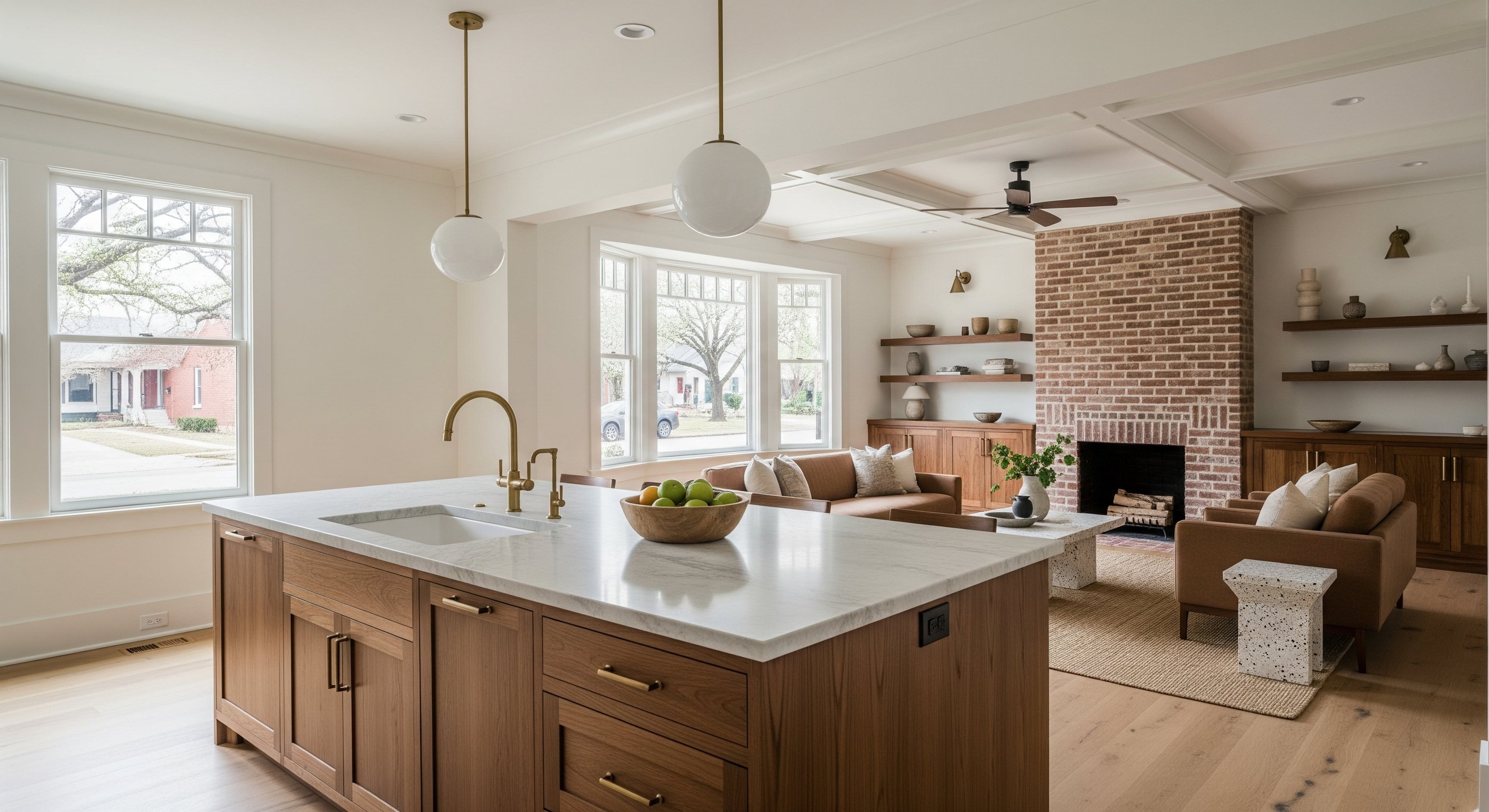
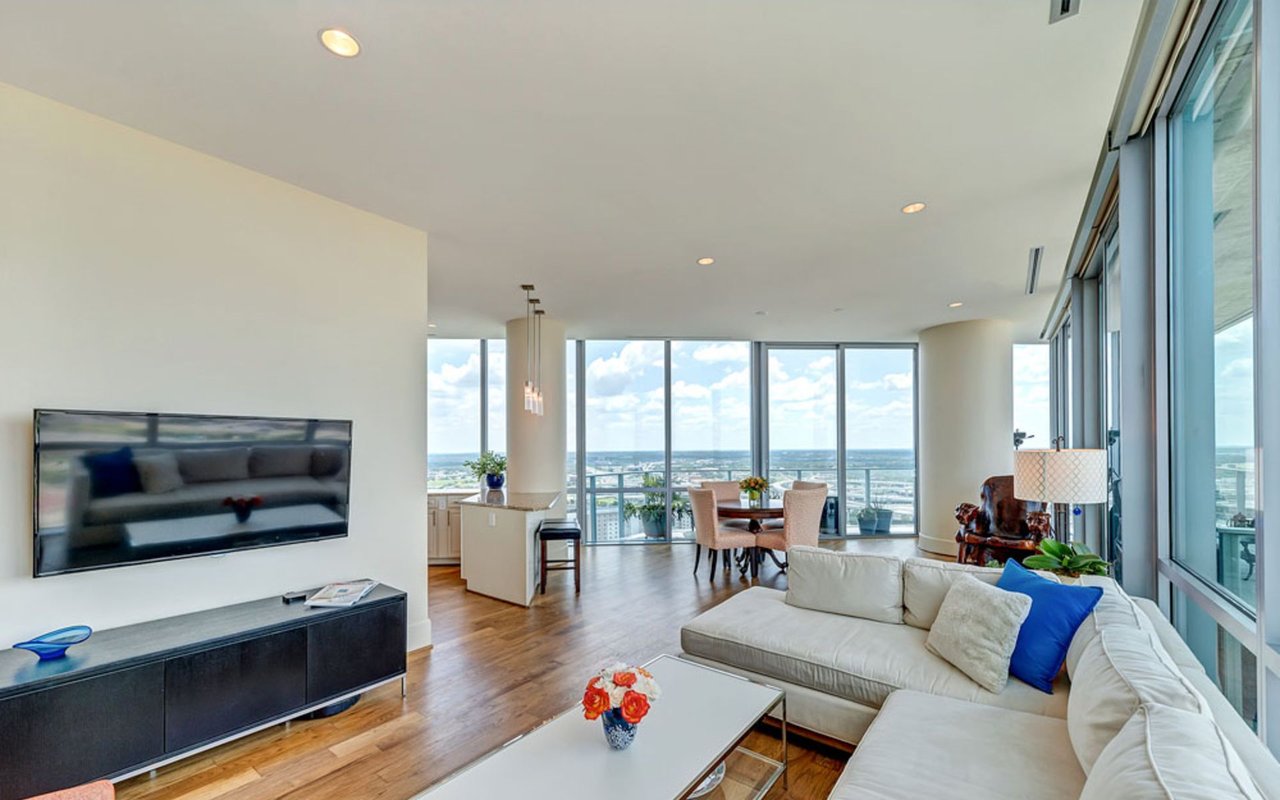
Primarily luxury condos, high-rise residences, modern apartments, and select townhomes with skyline views and lock-and-leave convenience.
Trinity Metro bus routes, TEXRail to DFW Airport, Trinity Railway Express to Dallas, plus immediate highway connectivity for commuters.
Humid subtropical climate with hot summers, mild winters, and long outdoor seasons suitable for patio dining and riverfront recreation.
Performance halls, art galleries, boutique hotels, fitness studios, parks, river trails, and essential retail all within walking distance.
Mix of professionals, executives, empty nesters, and investors seeking low-maintenance urban living in a growing Metroplex economy.
Strong job base, airport rail access, vibrant nightlife, cultural institutions, and consistent long-term population growth.
Urban parking costs, HOA fees in luxury buildings, and peak event traffic during major downtown gatherings.
Direct access to Trinity River Trails for cycling and running, nearby parks, and short drives to the Fort Worth Stockyards and Cultural District.
Downtown Fort Worth delivers a refined urban lifestyle—walkable streets, skyline residences, cultural depth, and seamless regional connectivity define everyday living in the city’s vibrant core.
Downtown Fort Worth delivers a full spectrum of urban amenities—from major healthcare systems and everyday retail to performance venues, rooftop dining, and riverfront recreation. Residents benefit from walkable access to essential services and lifestyle conveniences within the city’s vibrant core.
Families living in Downtown Fort Worth are primarily served by Fort Worth Independent School District (FWISD), with access to public, charter, magnet, and private school options throughout the central city. Proximity to the Near Southside, Cultural District, and TCU area expands the range of academic opportunities within a short drive.
Many nearby campuses emphasize college-prep curriculum, advanced placement programs, fine arts, and STEM pathways. Several private and faith-based institutions also serve families seeking smaller class sizes or specialized educational models. Always confirm attendance zones and program availability prior to enrollment.
| School / Preschool | Type | Location | Highlights |
|---|---|---|---|
| Charles Nash Elementary | Public (PK–5) — FWISD | Near Downtown | Neighborhood-focused campus serving central Fort Worth with enrichment programs and community engagement initiatives. |
| De Zavala Elementary | Public (PK–5) — FWISD | Near Southside | Strong literacy emphasis, dual-language opportunities, and accessible central location. |
| Daggett Middle School | Public (6–8) — FWISD | Near Southside | Established academic programs with athletics and performing arts options. |
| Young Women’s Leadership Academy | Public Magnet (6–12) — FWISD | Central Fort Worth | College-preparatory environment with STEM focus and leadership development curriculum. |
| Trimble Technical High School | Public (9–12) — FWISD | Downtown | Historic campus offering career and technical education pathways alongside traditional academics. |
| Paschal High School | Public (9–12) — FWISD | Near TCU | Comprehensive high school with AP courses, athletics, and arts programs. |
| Fort Worth Academy | Independent (K–8) | Near West Fort Worth | College-prep foundation with small class sizes and STEM-focused curriculum. |
| All Saints’ Episcopal School | Private (PK–12) | Southwest Fort Worth | College-preparatory program with arts, athletics, and leadership development. |
| Sundance Montessori | Private Preschool | Central Fort Worth | Montessori-inspired early childhood education emphasizing independence and hands-on learning. |
| Downtown Early Education Centers | Private / Faith-Based Preschool | Downtown Area | Play-based and structured preschool options serving working families in the urban core. |
District: Fort Worth ISD (FWISD). Magnet programs, transfers, and private school admissions vary annually. Confirm attendance boundaries, enrollment criteria, and transportation availability directly with each institution.
Downtown Fort Worth has emerged as a high-demand urban market within the DFW Metroplex, supported by continued population growth, expanding employment corridors, and a rising preference for walkable, low-maintenance living. Investor interest is strongest in well-located condominiums, luxury high-rise residences, and newer multifamily buildings near Sundance Square, the Convention Center district, and the Trinity River corridor. Pricing typically reflects an “urban core premium” versus the broader city, especially for skyline views, upgraded finishes, and amenity-rich buildings.
Why Downtown Fort Worth? The rental base remains steady due to nearby hospitals, corporate offices, universities, and cultural anchors, while commuter connectivity strengthens demand from professionals who value access to I-30, I-35W, TEXRail, and Trinity Metro. In 2025, Fort Worth’s housing market showed signs of stabilization (more balanced negotiating conditions), while apartment occupancy remained strong across the area—supporting a consistent long-term outlook for well-positioned downtown assets.
| Market Segment | Typical Price | Market Signal | Days on Market |
|---|---|---|---|
| Downtown Fort Worth (Urban Core) | ~$370K median (est.) | Balanced / building-dependent | ~101 days (est.) |
| Fort Worth (Citywide) | ~$379K avg. (2025) | Stabilizing pricing | ~55 days |
| Tarrant County | ~$443K avg. (2025) | Steady demand | ~54 days |
| Downtown Rentals | ~$1,693/mo avg. | Occupancy strong | N/A |
Downtown Fort Worth offers compelling fundamentals for long-term investors: a growing regional economy, strong infrastructure, and consistent tenant demand from professionals who value transit access and proximity to offices, hospitals, and entertainment. While individual buildings can vary by HOA costs and inventory levels, well-maintained units with strong walkability and parking convenience tend to hold appeal across market cycles.
Key Investment Highlights:
Whether targeting luxury high-rise residences, modern urban condos, or stabilized rental units near transit and employment hubs, Downtown Fort Worth provides a solid investment story anchored by connectivity, lifestyle demand, and continued Metroplex growth.
Downtown Fort Worth offers a lifestyle that blends walkable city living with a distinctly Texas sense of culture and character. From Sundance Square’s lively dining and events to world-class performing arts and skyline views, downtown puts the city’s best experiences within easy reach. The Trinity River corridor adds an outdoor layer to city life, with trails and green space close to the urban core.
Housing options range from luxury high-rise condominiums and modern apartments to historic loft-style residences in converted buildings. Premiums typically reflect building amenities, views, parking access, and walkability. Many downtown properties operate under HOA guidelines—buyers should review monthly dues, lease restrictions, and building policies during due diligence.
Day-to-day life is easy and connected: commute via I-30 and I-35W, catch a train at Fort Worth Central Station, or ride TEXRail to DFW Airport. Residents enjoy quick access to the Cultural District, West 7th, and Near Southside, plus an impressive lineup of museums, theaters, and seasonal festivals. For those who want a low-maintenance, high-convenience lifestyle, downtown offers a compelling blend of energy and comfort.
With its mix of connectivity, culture, and steady demand, Downtown Fort Worth remains a strong option for primary residences, second homes, and long-term investment-focused buyers.
Explore Downtown Fort Worth Real Estate →Downtown Fort Worth offers connectivity, culture, and long-term growth potential—an urban setting where lifestyle and investment opportunity align.
Downtown has 3,140 households, with an average household size of 1. Data provided by the U.S. Census Bureau. Here’s what the people living in Downtown do for work — and how long it takes them to get there. Data provided by the U.S. Census Bureau. 8,124 people call Downtown home. The population density is 5,508 and the largest age group is Data provided by the U.S. Census Bureau.
Total Population
Population Density Population Density This is the number of people per square mile in a neighborhood.
Median Age
Men vs Women
Population by Age Group
0-9 Years
10-17 Years
18-24 Years
25-64 Years
65-74 Years
75+ Years
Education Level
Total Households
Average Household Size
Average individual Income
Households with Children
With Children:
Without Children:
Marital Status
Blue vs White Collar Workers
Blue Collar:
White Collar:
There's plenty to do around Downtown, including shopping, dining, nightlife, parks, and more. Data provided by Walk Score and Yelp.
Explore popular things to do in the area, including Panther City Sculpture, Fort Worth Carriage and Wagon, and Stride Strong Coaching.
| Name | Category | Distance | Reviews |
Ratings by
Yelp
|
|---|---|---|---|---|
| Active | 0.33 miles | 0 reviews | 0/5 stars | |
| Active | 0.44 miles | 1 review | 5/5 stars | |
| Active | 0.47 miles | 0 reviews | 0/5 stars | |
| Nightlife | 0.32 miles | 2 reviews | 4.5/5 stars | |
| Nightlife | 0.37 miles | 1 review | 4/5 stars | |
| Beauty | 0.08 miles | 0 reviews | 0/5 stars | |
| Beauty | 0.12 miles | 0 reviews | 0/5 stars | |
| Beauty | 0.43 miles | 0 reviews | 0/5 stars | |
| Beauty | 0.44 miles | 0 reviews | 0/5 stars | |
| Beauty | 0.47 miles | 0 reviews | 0/5 stars | |
| Beauty | 0.51 miles | 0 reviews | 0/5 stars | |
| Beauty | 0.72 miles | 0 reviews | 0/5 stars | |
| Beauty | 0.72 miles | 0 reviews | 0/5 stars | |
| Beauty | 0.72 miles | 0 reviews | 0/5 stars | |
|
|
||||
|
|
||||
|
|
||||
|
|
||||
|
|
||||
|
|



Compass
5049 Edwards Ranch Road, Suite 220
Fort Worth, TX 76109
The John Zimmerman Group